Governments across the world are introducing new environmental and health-related regulations, including plastic packaging taxes and sugar-based excise duties. Businesses are now expected to calculate and report these taxes accurately based on product composition, quantity, and consumption.
Managing these calculations manually through spreadsheets can be time-consuming, error-prone, and difficult to audit.
To address this challenge, Microsoft Dynamics 365 Business Central introduces enhanced Excise Journal capabilities that help organizations automate plastic and sugar tax calculations directly within the ERP system.
Why Plastic & Sugar Tax Matters
Many countries now apply taxes on:
Plastic packaging materials
Sugar content in beverages and food products
Environmentally harmful materials
These regulations aim to:
Reduce plastic waste
Encourage sustainable packaging
Promote healthier food consumption
Improve environmental compliance
As regulations evolve, organizations need systems capable of:
Tracking material composition
Calculating tax liabilities automatically
Preparing accurate reporting data
Reducing compliance risks
Business Value of Excise Tax Management in Business Central
With the new Excise Journal framework, Business Central helps organizations:
✅ Automate tax calculations
✅ Eliminate dependency on spreadsheets
✅ Improve calculation accuracy
✅ Reduce compliance risks
✅ Maintain audit-ready transaction records
✅ Prepare data for country-specific tax reporting
The solution provides a standardized calculation engine while still allowing flexibility for local tax declaration requirements.
Key Excise Tax Features in Business Central
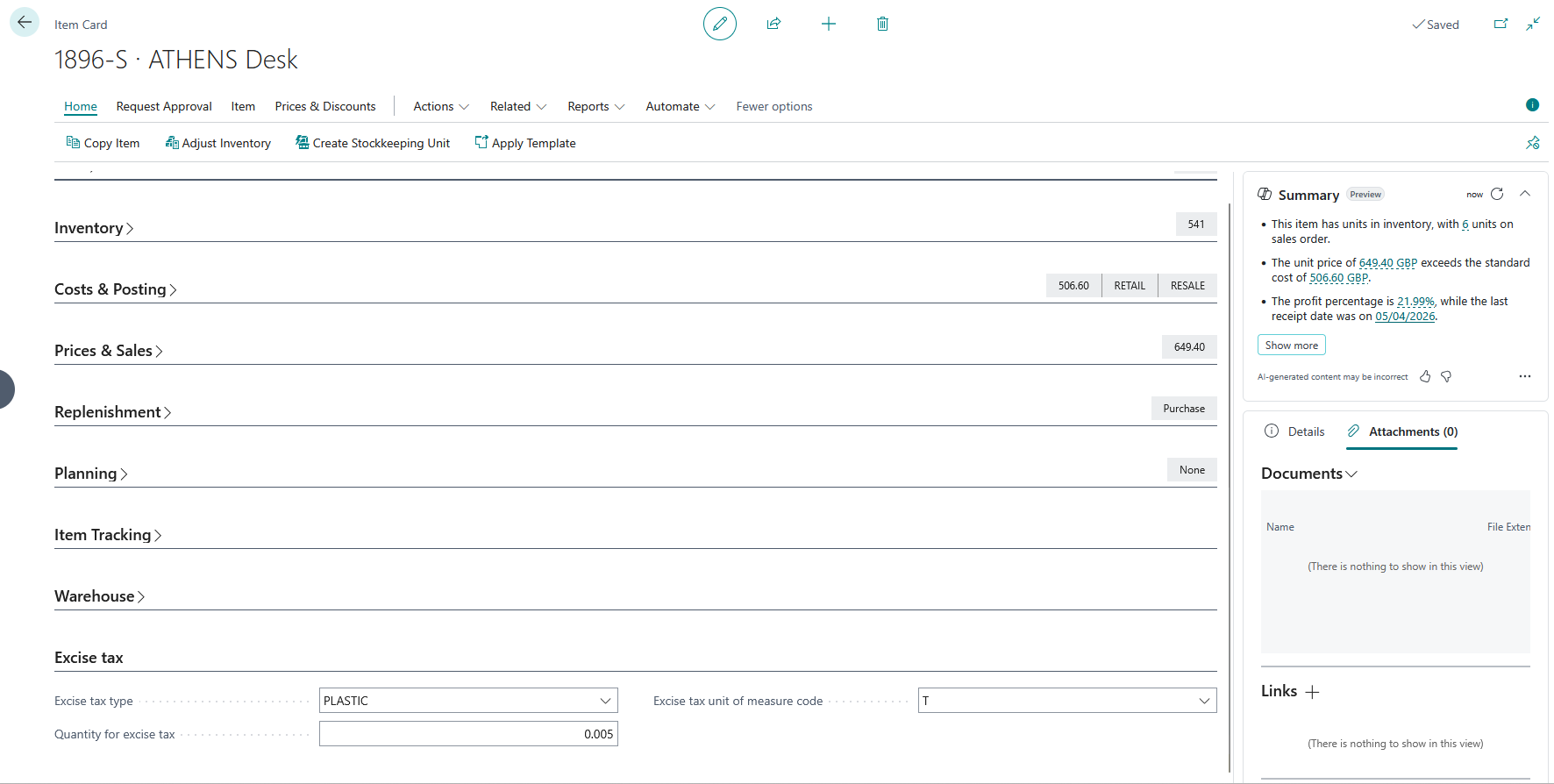
Business Central introduces new fields on:
Item Card
Fixed Asset Card
These fields define the basis for excise tax calculations.
New Fields Introduced
| Field | Purpose |
|---|---|
| Excise Tax Type | Defines Plastic or Sugar tax |
| Qty. for Excise Tax | Defines taxable quantity per unit |
| Excise UOM | Unit of measure for tax calculation |
These fields allow businesses to configure product-level tax attributes directly in the ERP
Plastic Tax Calculation in Business Central
How Plastic Tax Works
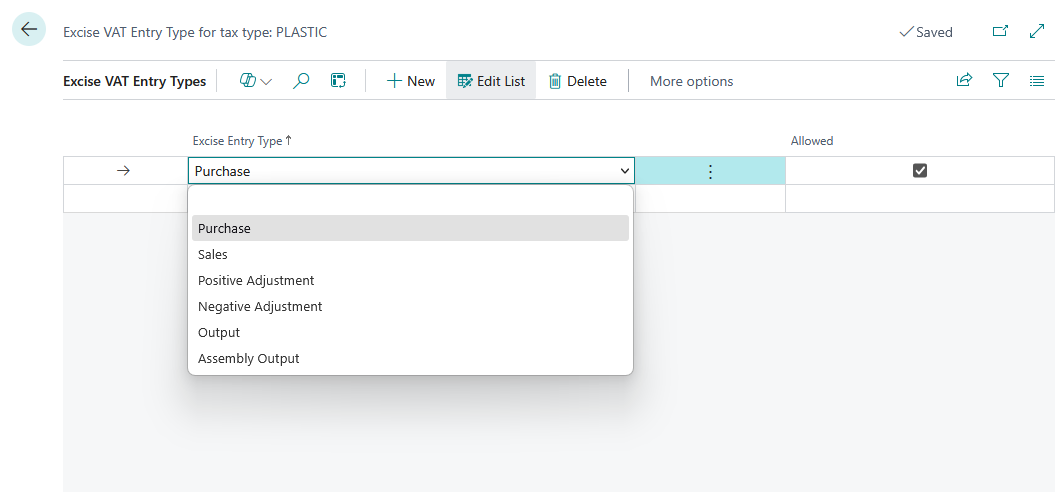
For plastic-related taxes, Business Central calculates excise quantities by aggregating inventory movements from:
Purchases
Positive Adjustments
Production Output
Assembly Output
Fixed Asset Acquisitions
The system then calculates the tax basis using:
Excise Tax Basis=Transaction Quantity×Qty. for Excise Tax
Example: Plastic Tax Calculation
Item Setup
| Field | Value |
|---|---|
| Item | Athens Desk |
| Excise Tax Type | Plastic |
| Qty. for Excise Tax | 0.005 |
| Excise UOM | TONNE |
This means each Athens Desk contains:
0.005 tonnes (5 kg) of taxable plastic material.
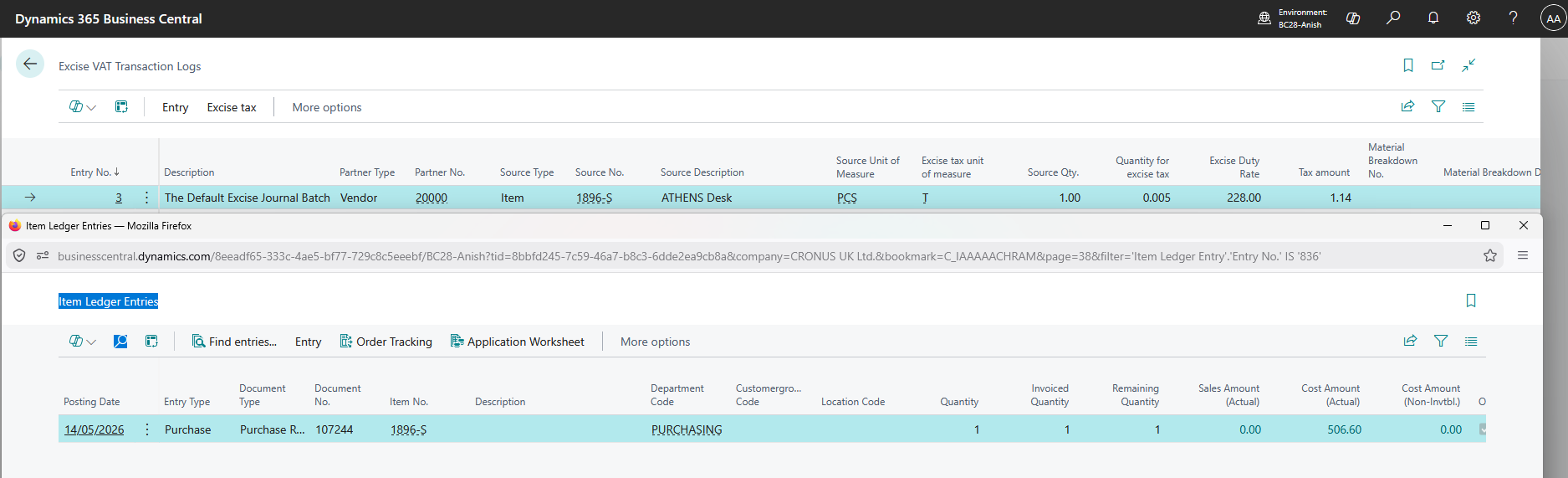
Purchase Transaction
Quantity Purchased | Plastic Qty per Unit |
|---|---|
1 pcs | 0.005 tonnes |
Taxable Plastic Quantity
1×0.005=0.05 tonnes
If the tax rate is:
£228.82 per tonne
Then:
0.005×228.82=£1.14.05
Similar way we can setup for Sugar tax.
Excise Journals in Business Central
The Excise Journal acts as the central processing area for:
Reviewing taxable quantities
Calculating excise amounts
Generating reporting data
Users can:
Filter by reporting period
Review transaction-based tax calculations
Validate quantities before submission
Export data for local tax declarations
Flexibility for Country-Specific Reporting
Business Central focuses on generating:
✅ Accurate calculation data
✅ Standardized tax basis
✅ Transaction-level traceability
Country-specific:
Forms
Government submissions
Electronic filing formats
remain flexible for partners and customers to customize according to local legislation.
Final Thoughts
Environmental and sugar-related taxation is becoming increasingly important across global markets. Organizations need ERP systems capable of handling these evolving compliance requirements efficiently.
With Excise Journals in Business Central, businesses can automate plastic and sugar tax calculations using transaction-based logic while reducing manual effort and compliance risks.
This functionality provides a strong foundation for:
Sustainable compliance
Accurate reporting
Future-ready ERP processes
Stay tune 🙂